
Industry
Automotive
Automotive injection molding components for programs from prototype through production volumes, qualified to PPAP and APQP.
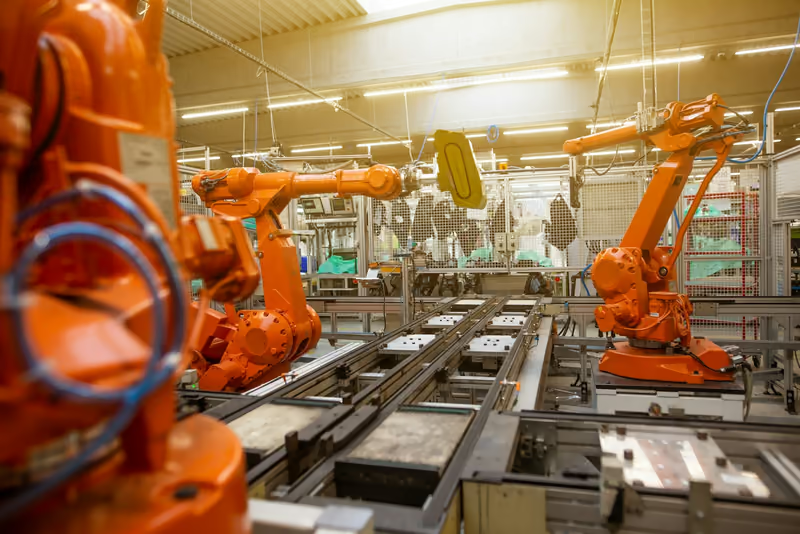
What is different about this sector
Automotive supply runs on documented process control rather than inspection. The customer assumes parts will conform because the process was qualified and is monitored, which is why PPAP exists and why capability indices matter more than a first article report.
Programs also run on long horizons. A part qualified today may be supplied for a decade, so change control, capacity planning, and end-of-life service supply are part of the commercial conversation from the start.
Standards and submissions
| Item | What it means |
|---|---|
| APQP | Advanced Product Quality Planning. The structured phase-gate process taking a part from concept to production launch. |
| PPAP | Production Part Approval Process. The evidence package proving the production process reliably produces conforming parts. Five submission levels exist, with Level 3 the most common. |
| FMEA | Failure Mode and Effects Analysis, for both design and process. Identifies what can fail, how likely, and what controls exist. |
| MSA | Measurement System Analysis. Establishes that the measuring method itself is capable before it is used to judge parts. |
| Cpk | Process capability index on nominated critical characteristics. Customers commonly require 1.33 or higher. |
Materials commonly specified
| Material | Typical automotive use |
|---|---|
| PP and PP-TD (talc filled) | Interior trim, bumpers, battery housings. Low cost and low density. |
| PA6 and PA66 | Under-bonnet components requiring temperature and chemical resistance. |
| PA-GF30 and PA-GF50 | Structural brackets and mounts where metal replacement is the goal. |
| PBT and PBT-GF | Connector housings and electrical components. Good dielectric properties and dimensional stability. |
| ABS and PC-ABS | Interior cosmetic parts, instrument panel components. |
| POM (acetal) | Fuel system components, latches, moving mechanisms. |
| PPS | High temperature under-bonnet and fluid-handling parts. |
| TPO and TPV | Flexible seals, weatherstrip components, soft-touch surfaces. |
What automotive buyers ask for
- PPAP submission at the level the program requires, with the full evidence package
- Capability studies on nominated critical characteristics, typically Cpk 1.33 or better
- Full dimensional layout on submission parts against the controlled drawing
- Material certificates and, where required, IMDS submission for substance reporting
- Documented change control, since any material or process change requires re-submission
- Capacity confirmation against program volumes, including peak demand
- Service part supply commitment beyond end of production
Automotive work is quoted against your submission requirements: PPAP level, control plan, and capability targets stated up front, and the documentation produced alongside the parts rather than reconstructed afterwards.
Typical applications
- Connector bodies and electrical housings
- Interior trim components and clips
- Under-bonnet brackets, ducts, and covers
- Battery and EV component housings
- Sensor housings and mounting hardware
- Prototype and validation parts ahead of production tooling
Also serving
Other industries
Medical injection molding
Molded components for medical devices. This page states what we can evidence for a regulated buyer, and what is still unconfirmed.
Consumer products
Parts where the surface finish matters as much as the dimensions, and where volumes ramp quickly.
Robotics
Structural and enclosure parts for robotics programs, where volumes sit between prototype and full production.
Electronics
Connector housings, PCB enclosures, and switch components in dielectric, flame-rated, and ESD-safe materials.
Questions
Frequently asked
What automotive buyers ask before nominating a supplier. Each answer comes from the sections above.
Ask an engineerCan Trumould support PPAP and APQP?
Yes. Automotive supply runs on documented process control rather than inspection, so the evidence package matters: PPAP submission at the level the program requires, capability studies on nominated critical characteristics (typically Cpk 1.33 or better), full dimensional layout on submission parts, and material certificates traceable to grade and lot.
Which materials are typical for automotive molded parts?
PP and talc-filled PP for interior trim, bumpers and battery housings; PA6, PA66 and glass-filled PA for under-bonnet parts needing temperature and chemical resistance; PBT and PBT-GF for connector bodies; ABS and PC-ABS for interior cosmetic parts and instrument panel components; and POM for clips and moving parts.
What automotive components does Trumould make?
Connector bodies and electrical housings, interior trim components and clips, under-bonnet brackets, ducts and covers, battery and EV component housings, sensor housings and mounting hardware, and prototype and validation parts ahead of production tooling.
Representative part
What we mold for this sector
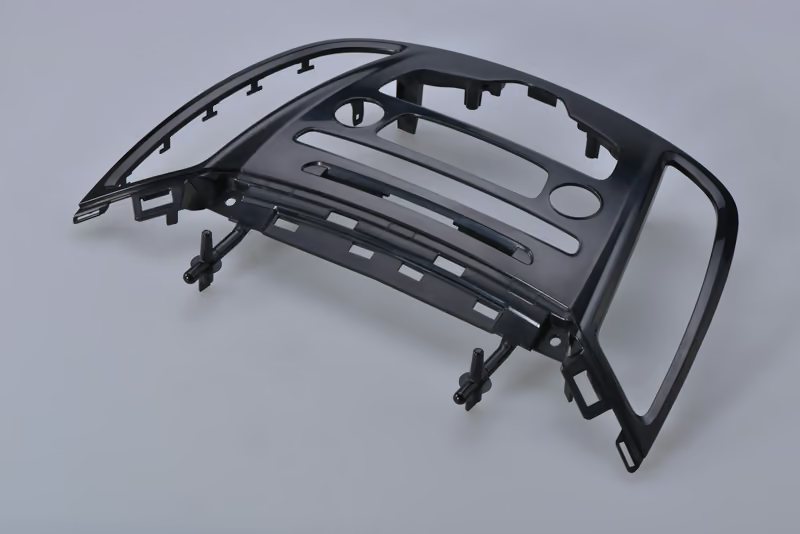
Interior trim bezel
A center console bezel as it leaves the tool, gate stubs still attached, before degating and finishing.
Let’s get started on your part
Send your CAD files and target volumes. We come back with a price, a lead time, and any design notes that would reduce either.