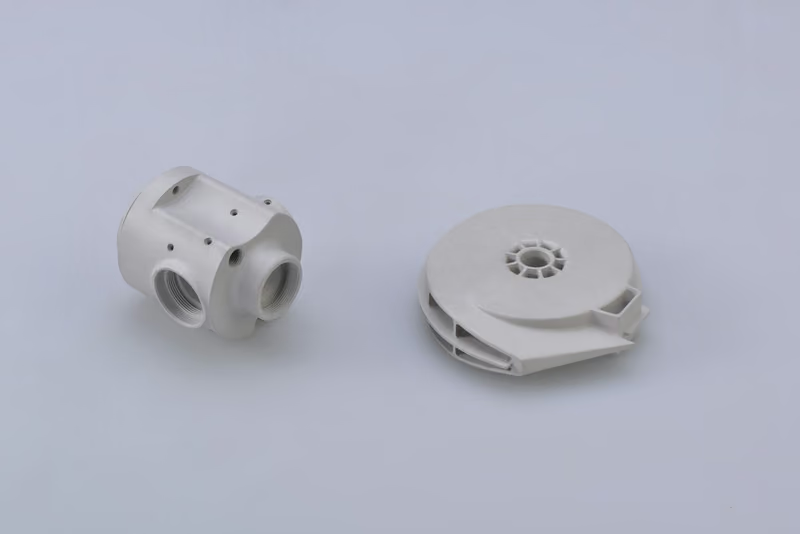
Double shot Injection Molding

2K or Double Injection Molding

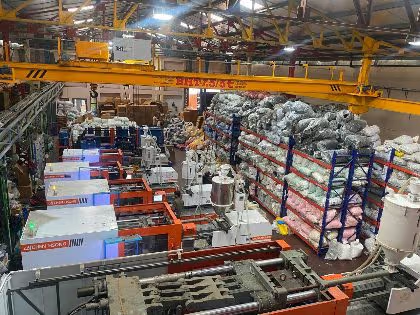
Double Shot injection molding, also known as two-shot or dual-shot injection molding, is a highly versatile manufacturing process used to create complex parts with multiple colors, materials, or textures. It involves injecting two different materials into a single mold, enabling the production of innovative and functional products. Special 2K Injection moulding machine is required for this technique.

Process Overview

Disadvantages of 2 Plate Mold

  • Limited Design Flexibility: This mold type can only handle parts with a single parting line. Complex designs with undercuts or multiple parting lines often require alternative mold types.
  • Part Ejection Issues: Since the mold cavity is formed by two plates closing together, parts must be ejected mechanically—often by a robot arm. This can introduce imperfections or visible parting lines on the finished product.

Ideal Use Cases for 2 plate mold

Mold Preparation

A mold is created with two or more cavities designed to accommodate the different materials. The mold is precision-engineered to ensure proper alignment and sealing.

First Shot

The first material, typically a rigid or structural polymer, is injected into the mold cavity. It partially fills the cavity or specific areas as required. Eg PP, PS, ABS, PC Etc.

Intermediate Step

The mold is opened, and the partially filled cavity is prepared for the second shot. This may involve cooling or other necessary treatments.

Second Shot

The second material, often a soft or flexible polymer, is injected into the remaining cavity space or specific areas. It bonds with the first material to create the final product. Eg. TPE, PVC, TPU etc.

Cooling and Ejection

The mold is cooled to solidify the materials. Once cooled, the finished part is ejected from the mold.

Material Selection

1

Compatibility

The materials must be compatible to ensure proper bonding and adhesion between the two shots.

2

Properties

Each material should possess the desired characteristics such as hardness, flexibility, color, or texture.

3

Processing Parameters

Materials must have similar melt temperatures and flow properties to ensure successful injection and bonding.

Benefits and Application of Double shot Injection Molding

  • Enhanced Design Option: The ability to combine different materials, colors, or textures in a single part allows for increased design freedom and creativity.
  • Improved Product Functionality: The combination of rigid and flexible materials enables the creation of products with enhanced performance, such as soft-touch grips or overmolded seals.
  • Streamlined Production: 2K injection molding eliminates the need for secondary assembly processes, reducing production time and costs.
  • Cost Efficiency: Despite the initial investment in specialized equipment, 2K injection molding can lead to cost savings in the long run due to reduced assembly and labor costs.

Design Consideration

  • Part Geometry: Designers must ensure proper material flow and prevent trapping of air or voids during the injection process.
  • Material Compatibility: Materials should have compatible shrinkage rates and thermal expansion properties to avoid warping or delamination.
  • Mold Design Optimization: The mold should be designed to facilitate accurate alignment and sealing during the injection process, ensuring precise placement of the second shot material.

Cost and Production Efficiency

  • Reduced Assembly: Eliminating secondary assembly processes reduces labor costs and minimizes the risk of errors or quality issues.
  • Faster Time-to-Market: Simultaneous injection of multiple materials reduces overall production time, allowing for

Application of Double shot Injection Molding

Automotive

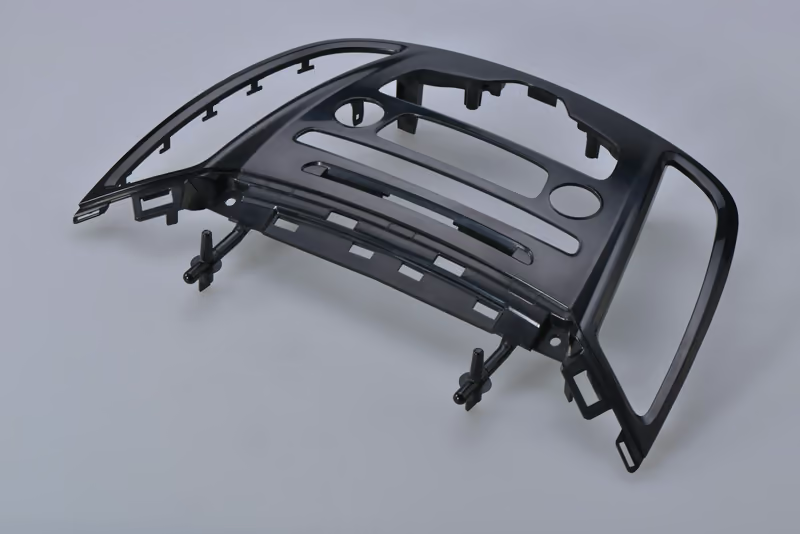
  • Interior Trim: 2K injection molding allows for the creation of multi-color interior trim components, such as door panels, dashboard inserts, and center console elements. Different colors and textures can be combined to achieve visually appealing and ergonomic designs.
  • Gearshift Knobs: Two-shot molding enables the production of gearshift knobs with soft-touch grips. The rigid inner core provides structural support, while the outer soft-touch material enhances comfort and grip.
  • Integrated Seals: Automotive parts often require sealing functionality. 2K injection molding allows for the integration of seals directly into components, eliminating the need for separate gaskets or seals and reducing assembly time and costs.

Electronics

  • Remote Controls: 2K injection molding allows for the creation of remote controls with multiple buttons and a soft-touch outer surface, enhancing user experience and ergonomics.
  • Sealed Enclosures: Electronic devices often require protection against moisture, dust, or other environmental factors. 2K injection molding enables the integration of sealing elements directly into the enclosure, ensuring optimal protection without the need for separate sealing components.
  • Wearable Devices: With the growing popularity of wearable devices, 2K injection molding can be used to create comfortable and aesthetically pleasing wearables with integrated sensors, buttons, and flexible components.

Medical Devices

  • Ergonomic Grips: Medical devices such as surgical instruments, dental tools, or handheld devices benefit from the incorporation of soft-touch or ergonomic grips. 2K injection molding enables the production of devices that are comfortable to hold and use.
  • Gaskets and Seals: Medical devices often require effective sealing to prevent contamination or fluid leakage. 2K injection molding allows for the integration of gaskets and seals directly into the device, ensuring reliable performance and reducing the risk of assembly errors.
  • Soft-touch Surfaces: Devices like hearing aids, prosthetics, or medical wearables can be produced with soft-touch surfaces using 2K injection molding. This enhances patient comfort and usability.

Consumer Goods

    • Handles and Grips: Consumer products such as hand tools, kitchen utensils, or sporting equipment can benefit from the incorporation of two-shot molded handles or grips. This improves ergonomics, comfort, and overall user experience.
    • Decorative Features: 2K injection molding allows for the creation of decorative elements in products such as consumer electronics, personal care items, or home appliances. Multiple colors, textures, or finishes can be combined to achieve visually appealing designs.
    • Complex Structures: Products with intricate designs or complex internal structures, like toys, gaming accessories, or intricate packaging, can be manufactured using 2K injection molding. This technique enables the production of parts with different colors, materials, or textures in a single operation.

Choosing Between 2K Injection Molding and Overmolding

1

Material Combination and Complexity


2K Injection Molding: If the design requires multiple materials integrated throughout the entire part, with complex geometries and precise material placement, 2K injection molding is the preferred choice.
 
Overmolding: If the design requires adding a secondary material layer to specific regions or features of an existing part, overmolding is a suitable option. It provides the flexibility to enhance specific areas with different materials.

2

Design Flexibility


2K Injection Molding:This technique offers greater design flexibility, allowing for intricate part geometries, multiple colors, and material combinations within a single part.
 
Overmolding:While overmolding provides design flexibility by adding a layer of a different material, it is more limited in terms of part complexity and color options compared to 2K injection molding.

3

Production Considerations


Tooling and Equipment: 2K injection molding typically requires specialized equipment and molds capable of sequential injection. Overmolding may involve modifying existing molds or using dedicated overmolding machines
 
Production Efficiency: 2K injection molding is more suitable for high-volume production due to its efficient sequential injection process. Overmolding can be more time-consuming and may require additional steps for pre-molding the primary part before the overmolding process.

4

Cost Considerations


2K Injection Molding: This technique generally requires a higher initial investment in specialized equipment and molds. It is suitable for applications that justify the added cost by leveraging the benefits of complex part designs and material combinations.
 
Overmolding: Overmolding can be a more cost-effective option if only specific regions or features of the part require additional material layers, especially when modifying existing molds.

Categories

Recent Posts

Contact Us

    Scroll to Top